Performance evaluation of typical railway bridges under increased axle loads of freight wagons
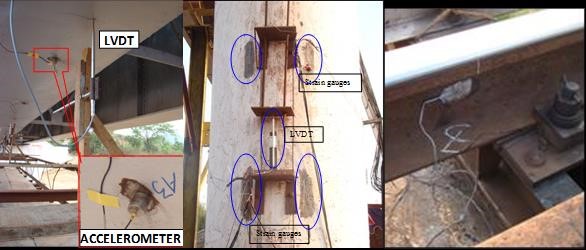
The main objective of the project involves the testing of five different types of railway bridges on the iron ore route of Southern Railway (SR) to evaluate their performance under the proposed increased axle loads of CC+8+2, i.e., upto 22.9 t per axle. This proposed alteration may subject the bridges to higher tractive effort / braking forces (due to the consequent requirement of high power locos) together with higher axle loads. Most of the bridges are designed to carry BGML standard loading. It is thus obvious that there is a need to check the performance of the concerned bridges under this proposed increased loading. As part of this project, four cycles of instrumentation, testing and measurement of response of the five identified bridges have been carried out in periodic intervals for three years to monitor their performance under the increased loading conditions. For the purpose of evaluation, instrumentation and testing schemes have been evolved separately for each of the five different types of bridges by judiciously selecting the measurement locations on the rail, on the girder and on the piers.
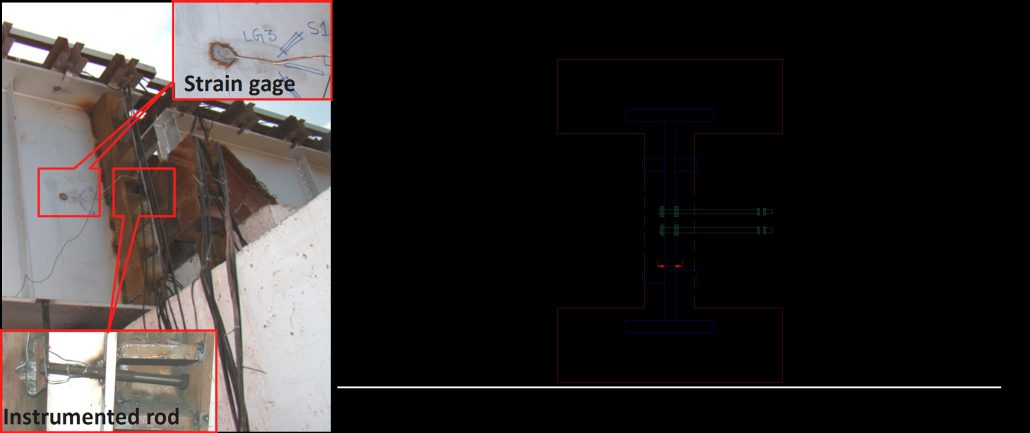
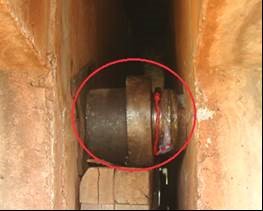
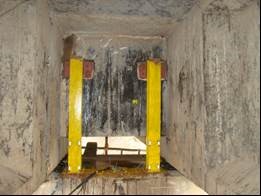
Special fixture arrangement has been designed and fabricated for measurement of longitudinal force from the girder An innovative arrangement has been fabricated for measurement of axial and bending strains from the piers of large mass Vibration characteristics of the bridge are measured using the accelerometers fixed along the length of the bridge. Several static and dynamic tests are conducted using the test train formation provided by the Southern Railway consisting of 59 wagons loaded with iron ore upto the increased load limits having 2 front locos, one rear loco and brake van. Detailed analysis has been carried out on the signals obtained from site, and it is found from the analysis that the results for bending moment, shear force and deflection for different cases are in good correlation with the results obtained from the analytical study conducted at CSIR-SERC.