Checking structural adequacy of stone masonry arch bridge modified to Broad Gauge conversion with Relieving Slab as Upgradation Strategy
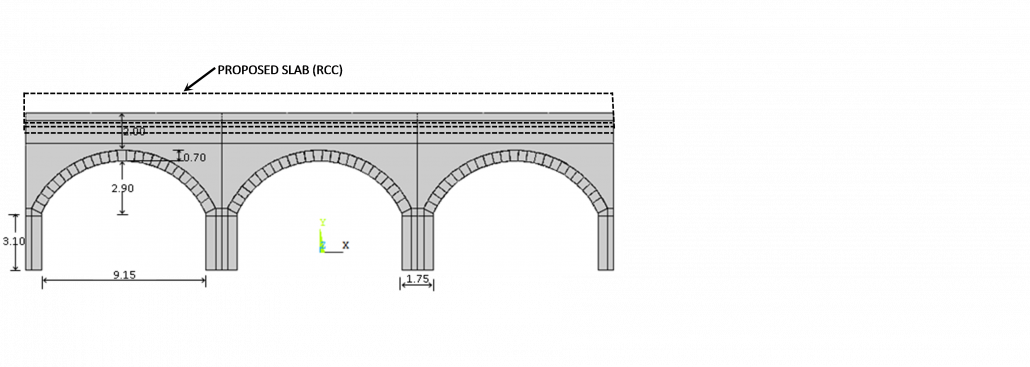
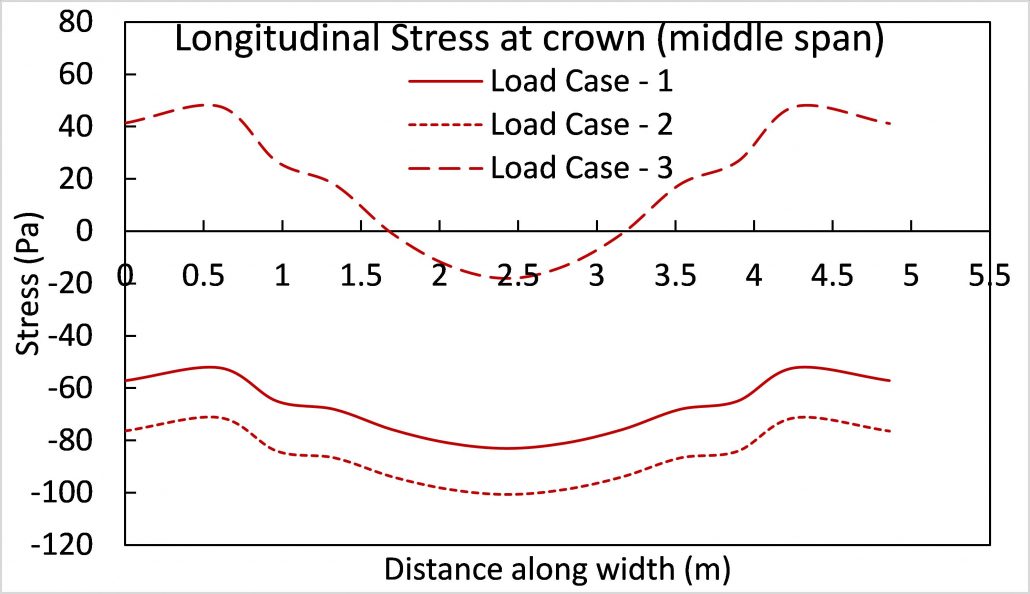
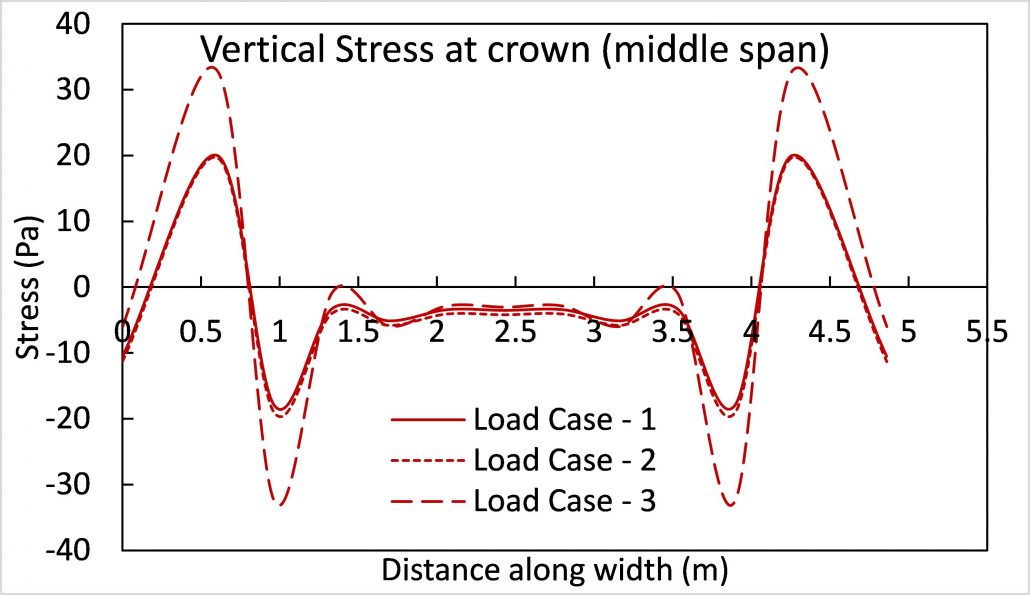
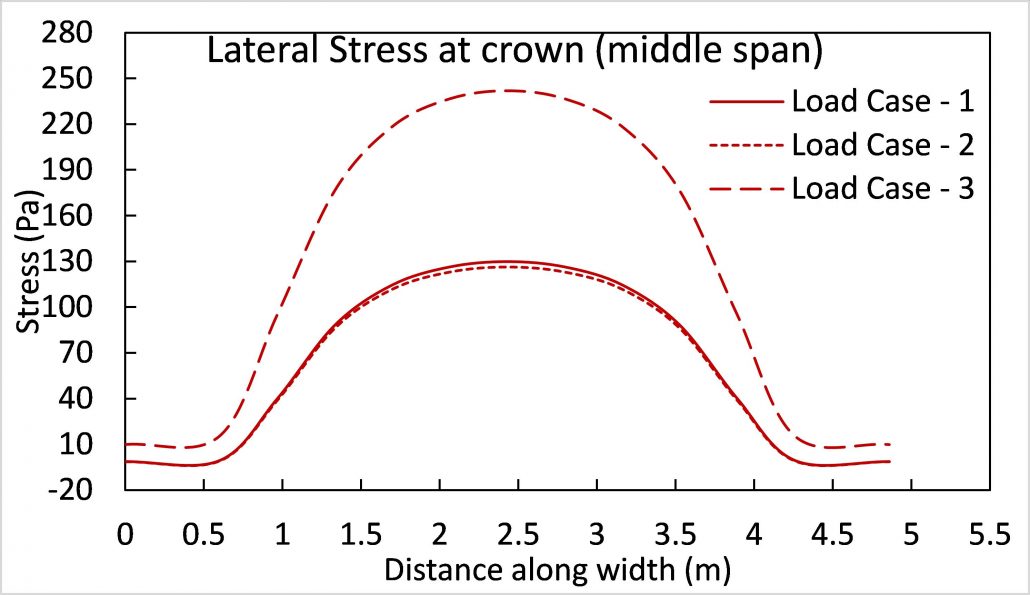
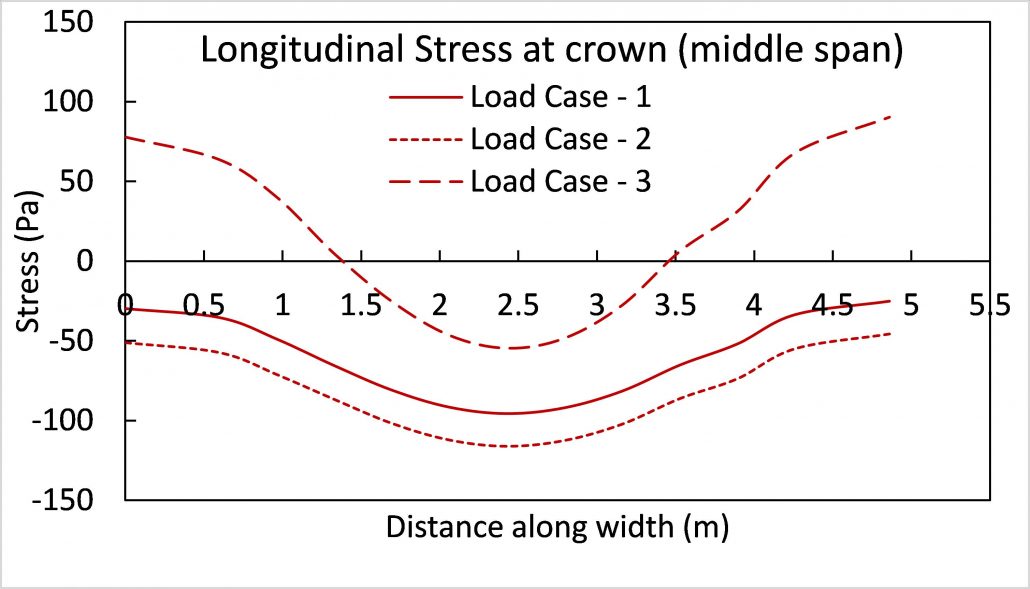
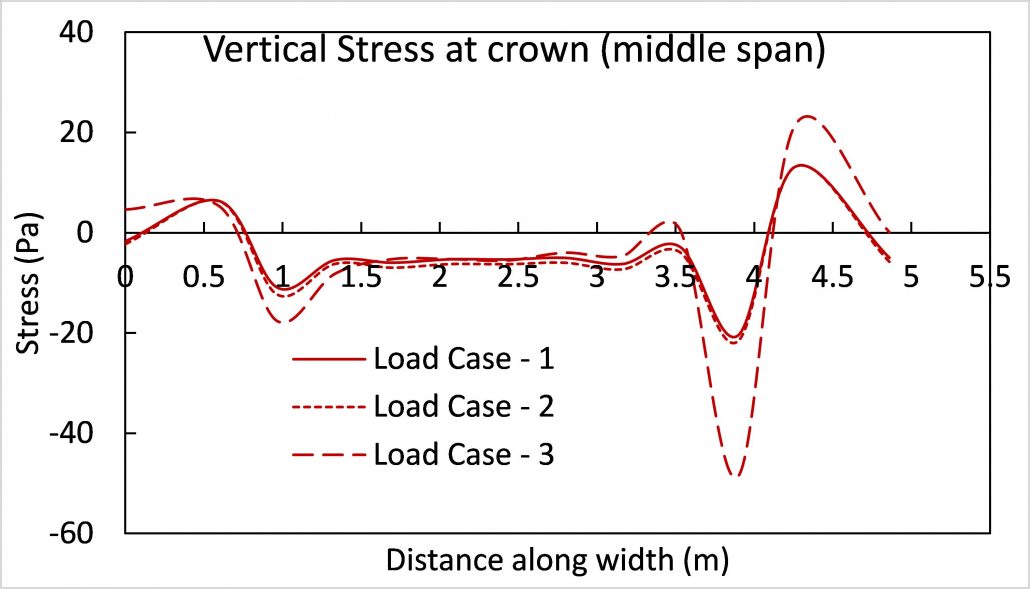
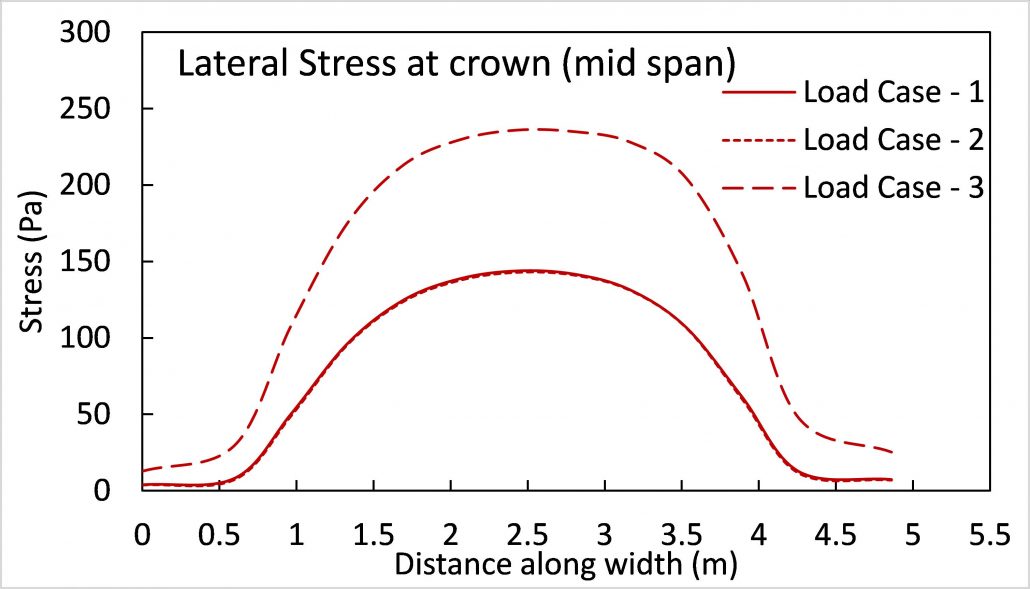
In this project, three dimensional numerical finite element modeling and analyses of the existing masonry arch bridge system and the proposed modified system have been carried out. The central objective of the study is to investigate the structural response by changing the structural system of the arch bridge by introducing reinforced concrete slab over the soil fill and to check adequacy of the proposed modification. Three different types of loading arrangements (due to train loading) were considered, i.e., train load on 5/8th of the clear span of the end arch, train load on first span and train load on first two spans of the arch. Along with the live load in each case, ballast load and self weight of the structural components are also considered during analysis. To avoid any tension between the fill and the arch masonry (both barrel and spandrel), special contact elements with friction co-efficient is incorporated in the finite element model. For masonry arch, William-Warnke model and for soil fill, Drucker-Prager plasticity models are considered to incorporate the nonlinearity in the material. Special care has been taken to ensure the mesh compatibility between the soil fill and the masonry arch. Further, in the proposed scheme, soil-plain cement concrete (PCC) and PCC-RCC slab, connectivity is ensured during analysis. Both the cases (existing masonry arch bridge and the proposed modified scheme) are analyzed under similar loading conditions. From the structural behaviour parameters obtained from the analysis of the existing arch bridge and the arch bridge with proposed modification by introducing a new RCC slab over the fill of the arch to accommodate the broad gage loading, the proposed modification of the arch bridge has been found to be generally efficient and adequate under the conditions examined.